Advertisement
History rarely turns on arguments. It turns on moments people cannot unsee.
A photograph. A short video. A few seconds that settle in the mind and refuse to leave. These are the moments when debate stops and something heavier takes its place. Not opinion, but
recognition.
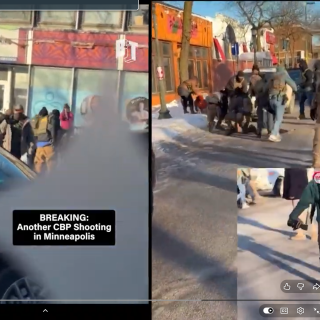
The killing of Alex Pretti during an encounter with ICE agents appears to be one of those moments.
The images circulating do not feel chaotic. They do not feel unclear. They do not show panic, aggression, or a scene spinning out of control. What they show is restraint on one side and lethal force on the other. That imbalance is immediately visible, and it is why the images carry so much weight.
This article is about why certain moments, moments like this, cut through the noise while others fade. It is about why discipline, restraint, and dignity have always carried more power than outrage ever could.
What the Moment Demands
Street encounters are not remembered for what was said. They are remembered for how people stood, or sat, or knelt.
They live on in still frames, stripped of sound and context, replayed years later by people who were not there. Tone disappears. Words disappear. What remains is posture, proximity, and restraint.
When force is used against someone who is visibly controlled and non-threatening, the image tells the story on its own. There is nothing to interpret. No competing explanation that can survive the frame. The imbalance of power becomes obvious without anyone having to point it out.
History keeps teaching this lesson. The moments that endure are rarely loud. They are quiet. Someone waiting. Someone sitting still. Someone refusing to escalate even when provoked.
That stillness is not passivity. It is clarity.
Why History Remembers Certain Images
The civil rights movement did not succeed by overpowering its opponents. It succeeded by exposing them.
During the civil rights era, the nation’s consciousness was reshaped not through shouting or slogans but through discipline under duress. Men and women sat quietly at segregated lunch counters. They dressed with care. They followed rules that were meant to demean them. When violence came, it came anyway. And when it did, the images were devastating precisely because there was no excuse for what they showed.
There was no plausible claim that force was necessary. No serious suggestion that the victims had caused it. The images showed people doing nothing wrong while others spat on them, struck them, and brutalized them. Those images did not fade away. They lodged themselves in the public conscience and have never let go.
That is how change happens.
Not when conduct is endlessly debated. Not when responsibility is blurred. But when abuse is revealed without cover.
Why the Images of Alex Pretti Matter
The images of Alex Pretti matter for the same reason. They show nothing that needs to be explained away. They show no aggression that can be exaggerated, no behavior that must be argued over.
They show restraint. They show vulnerability. They show force that appears unnecessary and final.
That is what gives them their force.
For those who protest, this is the lesson that should remain front and center. The most effective resistance is not the loudest. It is the cleanest. It is conduct so measured and so clearly reasonable that if the unthinkable happens, there is no question about what occurred or who crossed the line.
When a person is harmed while acting calmly and visibly restrained, their death cannot be dismissed as confusion or reframed as justification. It cannot be argued into ambiguity.
It becomes evidence.
And in moments like this, outrage gives way to something stronger. The record settles. The arguments fall away. What remains is a clear account of who held power and how it was abused.
This is not a defeat. This is the moment abuse is exposed and cannot be covered again.
-------------------------------------
Author’s note: Brandon Harmony is an attorney in Columbus, Ohio. More information is available at www.harmony-law.com